Calgary Blanket Rezoning Repealed: A Reset Toward More Thoughtful GrowthFrom my perspective, watching this unfold, the city chose to throw a massive blanket over the entire city. Instead, it may

Dated: April 13 2026
Views: 80
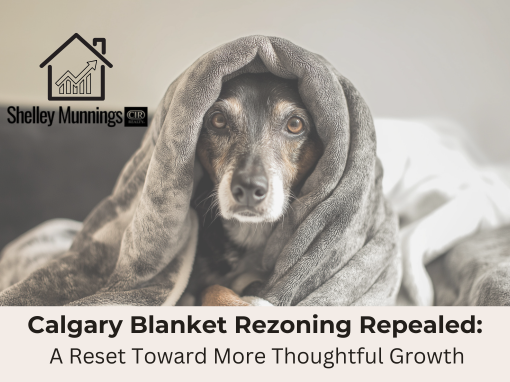
From my perspective, watching this unfold, the city chose to throw a massive blanket over the entire city. Instead, it may have been more effective to create smaller “lap afghans” in select areas, allowing for growth that is more thoughtful, strategic, and aligned with the needs of each community.
Calgary City Council has officially voted to repeal the blanket rezoning policy, with a 12–3 decision to return many properties to their previous land-use designations. The changes will take effect on August 4, 2026. This marks a significant shift in how development will move forward across the city.
The original policy introduced residential grade-oriented infill zoning (R-CG) as the default across many established neighbourhoods. This allowed for up to four units per parcel without requiring a land-use redesignation or public hearing.
Since its introduction in August 2024, more than 4,500 housing units were enabled, with approximately 780 currently under construction. While this increased supply on paper, it also created tension within communities that were not accustomed to this level of density.
With the repeal, properties will revert back to their previous zoning. Moving forward, developments such as row housing and higher-density infill will once again require individual rezoning applications and public input.
For projects already in motion, there is some protection:
This creates a transitional period where some developments will proceed under the old framework, while new projects will face a more traditional approval process.
One of the biggest challenges we are seeing is that the type of housing being built is not always aligned with what buyers actually need.
Many of the well-sized infill homes are priced far beyond what young families can afford. At the same time, these developments have often replaced older 1950s bungalows, which historically served as accessible entry points into the market. These homes may have required some updates, but they offered space, yards, and a manageable price point for buyers willing to put in some work.
The result is a growing gap:
A key goal of blanket rezoning was to introduce more “missing middle” housing. However, the reality on the ground has been mixed.
Many of the new multifamily units:
At the same time, homes with rear or under-drive garages often introduce multiple levels of stairs. This creates another challenge for downsizers or seniors who are looking for simpler, more accessible living options.
In trying to serve everyone, we have not fully served any one group particularly well.
Calgary has seen a notable increase in rental supply over the past two years, with a large number of purpose-built rental units coming online. While this has helped ease some pressure, vacancy rates remain relatively tight compared to historical norms.
As development slows or becomes more uncertain due to policy changes, there is concern that:
Developers have already indicated that the repeal may add approximately six months to project timelines, increasing costs that are ultimately passed on to buyers and renters.
One of the most consistent concerns from homeowners has been the impact of increased density on established neighbourhoods.
Residents have raised valid points around:
These are not concerns about growth itself, but about how that growth is implemented.
It is important to recognize that some areas of Calgary truly benefit from renewal.
There are communities where:
Thoughtful redevelopment can bring new life into neighbourhoods, improve housing diversity, and create more vibrant communities. The key is ensuring that this growth is targeted and aligned with infrastructure, schools, transit, and lifestyle needs.
Calgary is now in a period of reset. While the blanket approach has been removed, there is still a clear need for increased housing supply and more diverse options.
The challenge ahead is finding the right balance:
There is no one-size-fits-all solution, and this is where a more tailored, area-specific approach may prove to be the most effective path forward.
This decision is not the end of the conversation. It is the beginning of a more nuanced one. Calgary still needs growth. It still needs housing. But how that housing is delivered will shape the city for years to come. A more thoughtful, strategic approach, one that considers the unique needs of each community, may ultimately create better outcomes for homeowners, buyers, developers, and the city as a whole.

Welcome! I'm glad you stopped by!As a real estate agent in Calgary, I can attest to how remarkable this city is! With its stunning landscapes and vibrant atmosphere, Calgary is more than just a ....
Calgary Blanket Rezoning Repealed: A Reset Toward More Thoughtful GrowthFrom my perspective, watching this unfold, the city chose to throw a massive blanket over the entire city. Instead, it may
What Does Benchmark Price Mean in Real Estate Statistics?If you have spent any time reading real estate reports, you have likely seen the term benchmark price appear regularly in market updates. It
In 2026, the way Canadians qualify for investment mortgages could change and perhaps more dramatically than any shift in recent memory. The Office of the Superintendent of Financial Institutions
Winterizing Your Calgary Home: Essential Fall Maintenance TipsAs the leaves begin to fall and crisp mornings hint that winter is just around the corner, it’s the perfect time to give your home
 Data is supplied by Pillar 9™ MLS® System. Pillar 9™ is the owner of the copyright in its MLS® System. Data is deemed reliable but is not guaranteed accurate by Pillar 9™. The trademarks MLS®, Multiple Listing Service® and the associated logos are owned by The Canadian Real Estate Association (CREA) and identify the quality of services provided by real estate professionals who are members of CREA. Used under license.

The listing data displayed is deemed reliable but is not guaranteed accurate by CREA®. Data last updated on September 21, 2026 7:30 AM UTC The trademarks REALTOR®, REALTORS®; and the REALTOR® logo are controlled by The Canadian Real Estate Association (CREA®) and identify real estate professionals who are members of CREA®. Used under license. The trademarks MLS®, Multiple Listing Service® and the associated logos are owned by The Canadian Real Estate Association (CREA®) and identify the quality of services provided by real estate professionals who are members of CREA®. Used under license.
Show More...
 Data is supplied by Pillar 9™ MLS® System. Pillar 9™ is the owner of the copyright in its MLS® System. Data is deemed reliable but is not guaranteed accurate by Pillar 9™. The trademarks MLS®, Multiple Listing Service® and the associated logos are owned by The Canadian Real Estate Association (CREA) and identify the quality of services provided by real estate professionals who are members of CREA. Used under license.
Last Update: September 21, 2026 9:23 AM UT
C
Show More...
Data is supplied by Pillar 9™ MLS® System. Pillar 9™ is the owner of the copyright in its MLS® System. Data is deemed reliable but is not guaranteed accurate by Pillar 9™. The trademarks MLS®, Multiple Listing Service® and the associated logos are owned by The Canadian Real Estate Association (CREA) and identify the quality of services provided by real estate professionals who are members of CREA. Used under license.
Last Update: September 21, 2026 9:23 AM UT
C
Show More...
 Information should be deemed reliable but not guaranteed, all representations are approximate, and individual verification is recommended. Copyright ©2026 All rights reserved.
The trademarks REALTOR®, REALTORS® and the REALTOR® logo are controlled by The Canadian Real Estate Association (CREA) and identify real estate professionals who are members of CREA. The trademarks MLS®, Multiple Listing Service® and the associated logos are owned by CREA and identify the quality of
services provided by real estate professionals who are members of CREA. Used under license.
Show More...
Information should be deemed reliable but not guaranteed, all representations are approximate, and individual verification is recommended. Copyright ©2026 All rights reserved.
The trademarks REALTOR®, REALTORS® and the REALTOR® logo are controlled by The Canadian Real Estate Association (CREA) and identify real estate professionals who are members of CREA. The trademarks MLS®, Multiple Listing Service® and the associated logos are owned by CREA and identify the quality of
services provided by real estate professionals who are members of CREA. Used under license.
Show More...
 Data is supplied by Pillar 9™ MLS® System. Pillar 9™ is the owner of the copyright in its MLS® System. Data is deemed reliable but is not guaranteed accurate by Pillar 9™. The trademarks MLS®, Multiple Listing Service® and the associated logos are owned by The Canadian Real Estate Association (CREA) and identify the quality of services provided by real estate professionals who are members of CREA. Used under license.